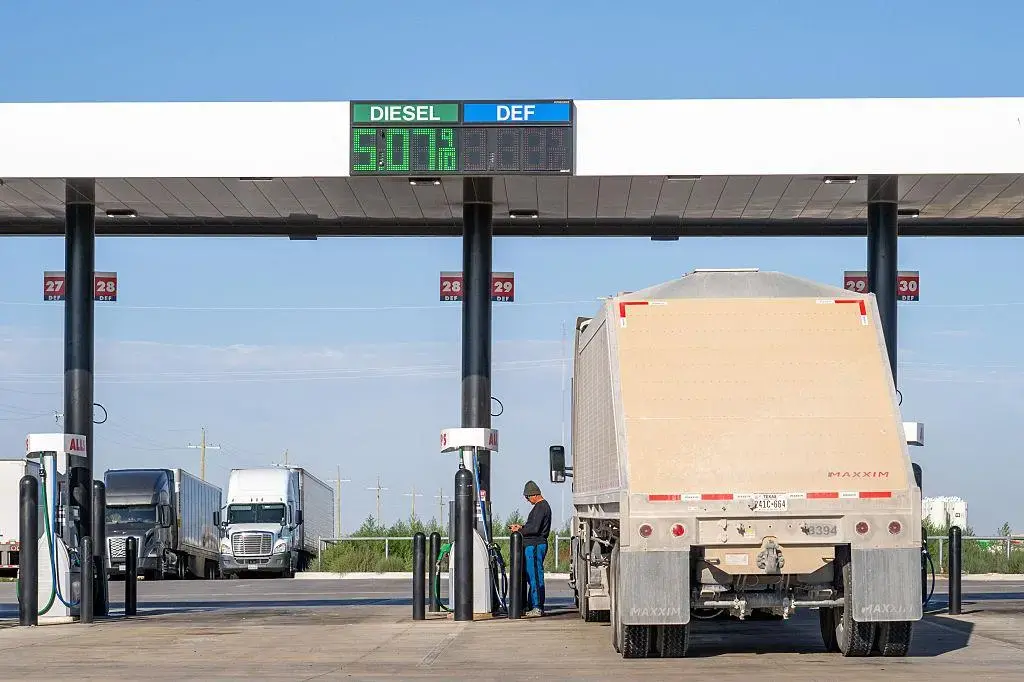
DRY VAN AND REEFER SPOT RATES INCREASE
The U.S. trucking market is showing renewed momentum ahead of the Thanksgiving holiday, with dry van and refrigerated freight rates increasing while diesel prices have declined for a second consecutive week. The latest figures from Truckstop.com, FTR Transportation Intelligence and the U.S. Energy Information Administration (EIA) point to a market in which seasonal freight demand is strengthening even as carriers continue to face elevated operating costs.
According to the latest data from Truckstop.com and FTR Transportation Intelligence, spot freight rates increased in two major trucking segments during the week ending November 6, 2026. Flatbed rates moved in the opposite direction.
Weekly Spot Rate Performance
| Equipment Type | Spot Rate per Mile | Weekly Change |
|---|---|---|
| Dry Van | $2.89 | +1.5% (+4.4 cents) |
| Reefer (Refrigerated) | $3.52 | +2.1% (+7.0 cents) |
| Flatbed | $3.25 | -1.7% (-5.7 cents) |
Refrigerated transportation recorded the strongest weekly increase among the three segments, followed by dry van. Flatbed rates declined, showing that the improvement was not uniform across the freight market.
The reported spot rates also remain approximately 40%–50% above year-ago levels, according to market benchmarks. This comparison confirms that spot-market pricing has strengthened considerably over the past twelve months, although individual lanes and equipment categories perform differently based on regional volume imbalances.
THANKSGIVING SHIPPING SUPPORTS SEASONAL DEMAND
The approaching Thanksgiving holiday is a decisive catalyst behind the latest movement in freight activity. Retailers, wholesalers, grocery distributors and food suppliers typically move substantial additional merchandise ahead of major holidays. Products must reach regional distribution centers, supermarkets, cold-storage warehouses and retail shelves before holiday consumer demand peaks.
Dry Van Surge
General consumer merchandise, packaged pantry goods, holiday beverages, household essentials, and pre-Black Friday retail inventory.
Refrigerated (Reefer) Premium
Fresh and frozen turkeys, hams, dairy products, baking supplies, produce, and temperature-sensitive food shipments requiring strict cold-chain compliance.
Flatbed Softness
Construction materials, building steel, and industrial cargo, which typically experience seasonal slowing as winter weather sets in across northern regions.
Refrigerated transportation is especially critical during the weeks leading up to Thanksgiving because food distributors must maintain strict delivery schedules and cold-chain integrity. The stronger reefer rate increase reflects this concentrated demand for reliable temperature-controlled equipment.
DIESEL PRICES FALL FOR A SECOND CONSECUTIVE WEEK
Fuel costs are offering welcome, if measured, relief for commercial trucking fleets.
According to the U.S. Energy Information Administration (EIA), the national average on-highway diesel price declined by 16.5 cents per gallon during the week ending November 9, reaching approximately $6.13 per gallon.
This marks the second consecutive weekly reduction and the lowest reported national average since early September, when diesel prices spiked well above the $6.50 threshold.
$6.13 / Gal National Average
-16.5¢ Weekly Drop
Down from September's historic $6.53 peak, delivering measurable relief across multi-truck operations.
Severe Regional Disparities
Lower Atlantic vs California
Lower Atlantic averaged ~$5.69/gal, while California remained elevated at ~$7.90/gal ($2.21 spread).
The $2.21 spread between regional averages illustrates how operating costs diverge depending on lane geography. A carrier running regional routes in the Southeast faces a significantly different fuel-cost baseline than a transcontinental fleet passing through the West Coast.
CARRIER ECONOMICS: SPOT VS. CONTRACT MARGINS
When spot freight rates rise and pump prices retreat, carriers in the spot market generate improved revenue per loaded mile while lowering variable fuel outlays. The resulting margin expansion provides necessary cash cushion after months of compressed profitability.
However, the margin formula involves far more than fuel pump receipts:
Key Operating Expense Components:
- Driver wages, benefits, and detention compensation
- Tractor and trailer equipment lease payments or financing charges
- Preventive maintenance, shop labor, parts, and tire replacement
- Commercial liability insurance premiums and regulatory compliance fees
- Tolls, highway permits, and terminal access charges
- Uncompensated deadhead miles and extended warehouse dwell time
Another vital distinction is the contrast between spot freight and contract freight. Spot rates govern individual transactional loads brokered in real time, whereas contract freight is locked into long-term enterprise agreements. Changes in spot rates do not automatically lift contract rate revenues, but sustained spot increases often establish the pricing foundation for upcoming annual contract renewals.
WHAT THE MARKET DATA MEAN FOR CDL-A DRIVERS
For professional truck drivers, strengthening freight demand is an encouraging indicator, but it is important to distinguish between carrier broker revenue and driver compensation structures.
Most company drivers are compensated via mileage pay (CPM), hourly wages, or guaranteed minimum salaries. Their take-home earnings are determined by their employment agreement—not by the broker rate on a load confirmation sheet. A carrier securing $3.52/mile on a reefer run does not automatically raise driver pay per mile, nor does falling diesel automatically produce a pay raise.
Nonetheless, stronger freight activity creates substantial hiring momentum and steady dispatch opportunities across the entire commercial driving spectrum:
Local Distribution & Retail Replenishment
Supermarket and big-box store stocking ahead of Thanksgiving drives heavy demand for drivers in local CDL-A truck driving jobs USA, pairing high-density delivery runs with daily home time.
Regional Food & Dry Freight Networks
Commercial haulers handling dedicated distribution hub-and-spoke routes via regional CDL-A truck driving jobs benefit from consistent loaded miles and scheduled weekly resets before the holiday.
Over-the-Road (OTR) Long-Haul Corridors
Rising refrigerated and dry van spot volumes ensure strong dispatch and cross-country mileage for drivers in OTR CDL-A jobs across the USA, with fleets optimizing fuel stops to capitalize on falling diesel prices.
JOB EVALUATION CHECKLIST, CHALLENGES & OUTLOOK
7 Factors CDL-A Drivers Should Review in Job Offers
- Guaranteed or Typical Weekly Earnings: Confirm whether advertised pay represents a floor guarantee or an idealized projection.
- Compensation Structure: Verify base CPM, hourly pay, or salary terms, and ensure authorized empty miles are compensated.
- Weekly Mileage Realism: Ask what drivers currently log on average, accounting for loading and detention times.
- Home-Time Consistency: Review contractual policies for home daily, weekly 34-hour resets, or bi-weekly rotations.
- Freight Type and Operating Area: Understand equipment specifics (dry van, reefer, dedicated) and running territories.
- Accessorial Pay: Review detention pay thresholds, breakdown pay, layover compensation, and safety bonuses.
- Employment Classification: Confirm whether the opportunity is a W-2 company-driver position with benefits or a 1099 independent contractor role.
Thanksgiving Driving Challenges
With Thanksgiving arriving on November 26, 2026, drivers must prepare for severe holiday congestion around distribution centers, retail arteries, and interstate choke points. Receiver docks may experience extended wait times, making detention tracking essential. Drivers must adhere strictly to federal Hours of Service (HOS) limits and verify customer holiday dock schedules well before arrival.
The Bottom Line:
The combination of higher spot rates for dry van ($2.89) and reefer ($3.52) alongside falling diesel prices ($6.13/gal) brings timely momentum to the U.S. trucking sector ahead of Thanksgiving. For CDL-A drivers, evaluating carrier stability, transparent compensation, and consistent weekly miles will deliver far greater earnings security than temporary rate spikes alone.
Official Sources & References:
- Overdrive, Trucking market and freight rate coverage, November 11, 2026: https://www.overdriveonline.com/
- U.S. Energy Information Administration (EIA), Weekly Retail Gasoline and Diesel Prices, November 9, 2026: https://www.eia.gov/petroleum/gasdiesel/
- Truckstop.com, Spot Freight Market Rate Index: https://truckstop.com/
- FTR Transportation Intelligence, Commercial Freight Indicators: https://www.ftrintel.com/