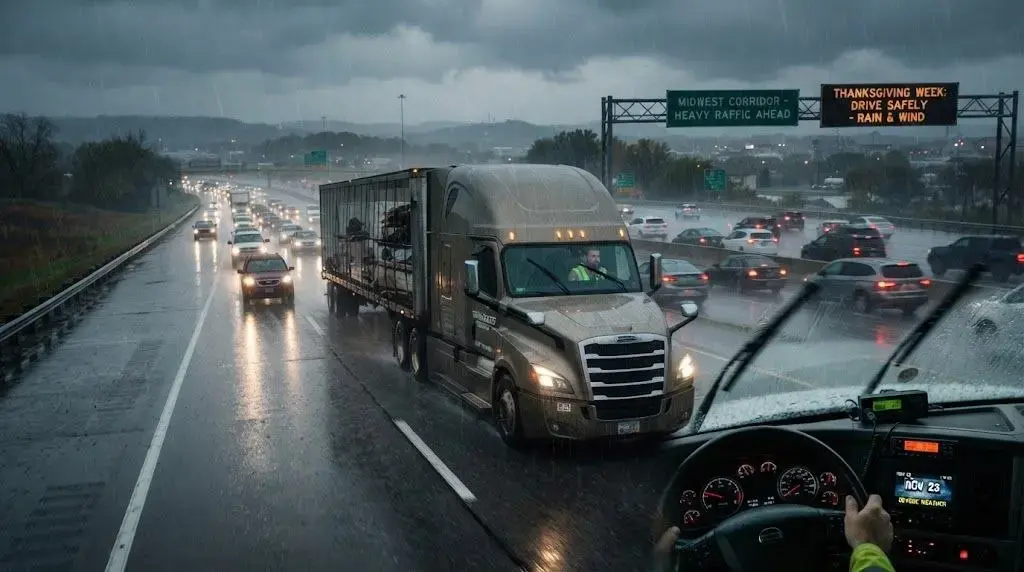
STORMS & HEAVY THANKSGIVING TRAFFIC
With Thanksgiving falling on November 26, millions of motorists are expected to travel during one of the busiest periods of the year. Weather systems moving across several regions could complicate deliveries, extend driving times, disrupt freight schedules and create additional hazards for commercial truck drivers.
For professional drivers, the combination of holiday traffic and changing weather conditions requires extra attention to trip planning, vehicle control, parking availability and hours-of-service compliance.
Storms Could Affect Major Freight Corridors
Forecasts issued November 22–23 indicate that storm systems could bring unsettled weather across portions of the Southeast, Mid-Atlantic, Northeast and Midwest during the Thanksgiving travel period. Depending on the storm's track and timing, drivers may encounter:
- Heavy rain and localized flooding on highways.
- Strong crosswinds affecting high-profile commercial vehicles.
- Reduced visibility from rain, fog and spray from surrounding traffic.
- Wet snow or mixed precipitation in parts of the Midwest and Northeast.
- Slippery roads, changing traction and potentially icy conditions.
- Traffic delays around major metropolitan areas and busy interstate corridors.
Drivers hauling freight across multiple states should avoid relying on a single forecast checked before departure. Conditions can change rapidly during a long-haul trip, particularly when moving between different weather systems or elevation levels. Monitoring updated forecasts, state transportation alerts and road conditions throughout the trip will be essential.
Heavy Thanksgiving Traffic Creates Additional Hazards
~428 Projected Fatalities
NSC Holiday Risk Estimate
National Safety Council projection for the period from 6 p.m. Wednesday, Nov. 25 through 11:59 p.m. Sunday, Nov. 29.
Defensive Driving Essential
Stopping Distance & Blind Spots
Loaded tractor-trailers require far greater distance to slow down when holiday travelers brake or cut in abruptly.
NSC identifies speeding, impaired driving, distraction, fatigue and failure to wear seat belts among major factors contributing to roadway fatalities. For commercial truck drivers, increased passenger traffic means encountering motorists who make sudden lane changes, brake abruptly near congested exits, linger in blind spots, tailgate large trucks or get distracted by phones and navigation apps. Maintaining a defensive driving approach is critical when traffic density surges.
RAIN, FLOODING, HIGH WINDS & WINTER ICE
Rain, Flooding and Reduced Visibility
Wet roads significantly alter how a commercial vehicle responds to braking, steering and acceleration. Heavy rain reduces tire traction, increases stopping distances and obscures lane markings while standing water conceals potholes and road debris.
Use extra caution near curved highway ramps, bridges, poor-drainage zones, temporary construction lane shifts and slowing traffic queues.
Do not attempt to cross flooded roadways simply because passenger vehicles appear to move through them—if water depth or road stability cannot be safely verified, take an alternate route or stop safely.
Strong Winds & High-Profile Equipment
Wind is a major concern during Thanksgiving week, especially for drivers hauling dry vans, refrigerated trailers and empty trailers. Strong crosswinds affect vehicle stability on exposed bridges, open plains and elevated roadways.
Risks escalate when running light or empty, where sudden gusts can push trailers laterally. When winds compromise vehicle control, reducing speed or parking at a safe facility should be decided based on real conditions rather than delivery schedule pressure.
Possible Winter Weather in the Midwest and Northeast
Late November storm tracks can bring wet snow, sleet, freezing rain and rapidly dropping temperatures across the Midwest and Northeast. Roads that initially look merely wet can quickly glaze into black ice—especially on bridges and overpasses exposed to cold air above and below.
- Watch for accumulating snow, slush obscuring lane lines and snow-covered shoulders.
- Avoid abrupt steering, hard braking and unnecessary lane changes when traction drops.
- Delay travel or pull into an authorized parking location whenever conditions exceed safe limits for your equipment.
THANKSGIVING WEEK SAFETY CHECKLIST FOR CDL-A DRIVERS
Holiday driving requires more preparation than simply checking the route and delivery appointment. Follow this three-phase safety checklist throughout Thanksgiving week:
1. Before Leaving the Terminal
- Check weather forecasts for every major region along the route.
- Review state DOT alerts, road closures and construction restrictions.
- Inspect tires, brakes, lights, windshield wipers and other critical equipment.
- Confirm the delivery appointment and receiving facility holiday hours.
- Plan fuel stops and identify potential truck parking locations in advance.
- Make sure emergency equipment and cold-weather supplies are stocked and accessible.
2. During the Trip
- Reduce speed immediately when rain, wind, fog or traffic conditions deteriorate.
- Increase following distance and avoid tailgating passenger cars.
- Watch for sudden braking near exits, construction areas and congested corridors.
- Use extra caution on bridges, ramps and exposed sections of highway.
- Avoid abrupt steering or braking on wet, icy or slippery surfaces.
- Monitor weather updates and road conditions continuously as the route progresses.
3. When Conditions Become Unsafe
- Do not attempt to outrun a storm or make up lost time by speeding.
- Find a safe, authorized parking location before conditions become critical.
- Communicate delays and changing arrival times promptly to dispatch.
- Do not continue through flooded roadways or hazardous conditions simply to protect an appointment.
- Follow applicable hours-of-service requirements and use available rest periods appropriately.
TRUCK PARKING & AVOIDING UNSAFE SCHEDULE PRESSURE
Truck Parking Could Become More Difficult
Holiday traffic increases demand for parking at truck stops and rest areas, especially near major interstates, metropolitan areas and popular freight corridors. Drivers who normally rely on familiar parking locations may find spaces occupied much earlier than usual—and severe weather can further shrink available capacity if drivers stop unexpectedly.
Planning overnight stops in advance helps reduce the risk of searching for parking late in the day while nearing HOS limits. Identify backup parking locations along your corridor and avoid parking on highway shoulders, restricted ramps or unauthorized areas that create severe collision hazards.
Holiday Delays Should Not Lead to Unsafe Driving Decisions
Thanksgiving freight schedules remain demanding even when traffic and weather make travel difficult. Drivers could face longer loading and unloading times, congested yards, detours and modified receiving hours.
Drivers should never compensate for traffic or weather delays by speeding, driving aggressively or pushing through fatigue. Updating ETAs and reporting unsafe road conditions early helps dispatchers and customers adjust expectations safely.
WHAT CDL-A DRIVERS SHOULD EXPECT ACROSS FREIGHT SEGMENTS
Thanksgiving week combines increased passenger vehicle traffic, multi-region storm risks, metropolitan congestion, scarce truck parking and changing warehouse operating hours. Not every lane will hit severe weather, but remaining flexible with route plans and arrival times is key.
Holiday traffic and winter weather alerts also affect each driving division differently across the U.S. freight network:
Local Metro & Retail Delivery
Drivers working in local CDL-A truck driving jobs USA face dense urban shopping traffic, congested supermarket docks and tight city intersections while returning home daily.
Regional Freight Corridors
Haulers operating dedicated multi-state distribution lanes in regional CDL-A truck driving jobs must balance shifting interstate weather alerts with customer holiday receiving windows and weekly home-time plans.
Long-Haul Over-the-Road (OTR)
Cross-country drivers running OTR CDL-A jobs across the USA encounter multiple climate zones in a single trip—requiring proactive parking reservations, HOS buffering and constant NWS radar checks across state lines.
For carriers and dispatch teams, realistic scheduling is equally important: holiday freight demand should never create expectations that drivers maintain normal transit times regardless of weather, congestion or road closures.
THANKSGIVING ROAD SAFETY & OFFICIAL SOURCES
Getting the Load Delivered Is Not the Only Priority
The Thanksgiving holiday is a vital period for freight transportation, with commercial trucks keeping grocery stores, retail shelves, fuel stations and supply chains stocked nationwide. Yet increased freight activity also puts more trucks on highways shared with millions of holiday travelers.
The latest weather forecasts and holiday traffic warnings serve as a timely reminder that professional driving requires preparation, patience and sound judgment. A well-planned route, updated weather alerts, generous following distance and a willingness to shut down when conditions deteriorate make all the difference.
Bottom Line:
Getting the load delivered matters—but arriving safely matters more. Plan parking early, monitor regional storm tracks along your corridor and never let holiday appointment pressure compromise safe operation.
Official Sources & References:
- Commercial Carrier Journal — Trucking Industry News: https://www.ccjdigital.com/
- National Safety Council (NSC) — Thanksgiving Holiday Safety: https://www.nsc.org/
- AccuWeather — U.S. Weather Forecasts: https://www.accuweather.com/
- National Weather Service (NWS) — Forecasts and Weather Alerts: https://www.weather.gov/