


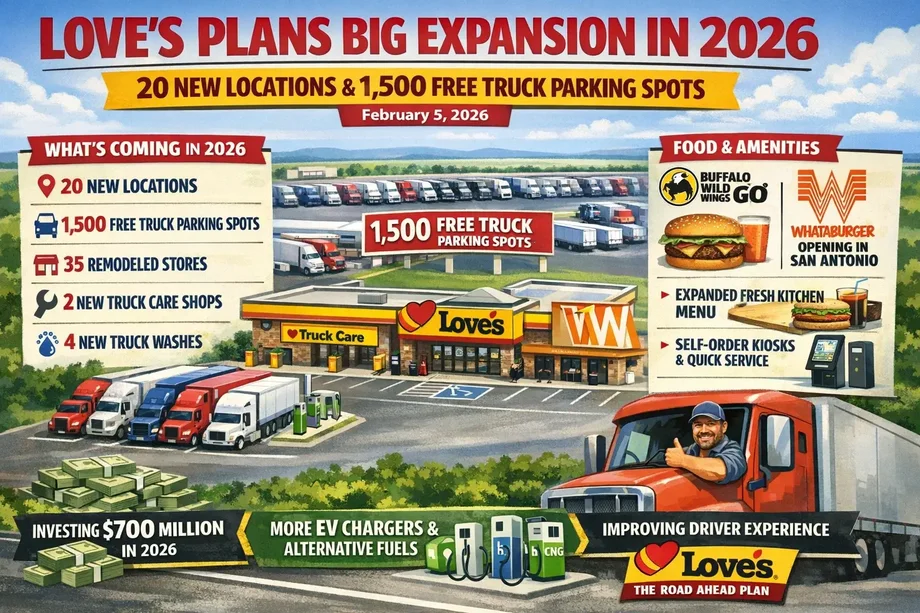
WHAT LOVE’S IS ADDING IN 2026
Love’s Travel Stops is moving forward with one of its most ambitious expansion strategies to date, focusing on new store openings and major infrastructure growth.
- • 20 new locations across high-traffic trucking corridors
- • 1,500 additional free truck parking spaces added nationwide
- • 35 existing stores fully remodeled or modernized
- • New dedicated Truck Care and wash facilities
FOOD & AMENITIES
Love’s is investing heavily in food service innovation to improve the travel experience for CDL-A drivers spending long hours on the road.
- • Expanded Love’s Fresh Kitchen menu with healthier options
- • Eight new Buffalo Wild Wings Go locations
- • First-ever Whataburger location inside a Love’s store
- • New self-order kiosks and mobile order-ahead systems
INVESTMENT & STRATEGY
Love’s has committed to investing approximately $700 million in 2026 as part of its long-term "Road Ahead Plan."
Shane Wharton, Love’s President, confirmed the company will "play offense," prioritizing long-term investments in truck drivers and highway infrastructure. By 2035, more than half of all locations are expected to be either newly built or fully remodeled.
LOYALTY UPGRADE
The loyalty ecosystem is expanding with more personalized rewards for professional drivers. Upgrades include increased points accumulation on fuel and in-store purchases, along with a faster mobile app experience for tracking rewards and finding rest stops.
FUTURE ENERGY
As the transportation industry evolves, Love’s is expanding alternative energy infrastructure:
- • 100 new EV charging stalls scheduled for 2026
- • Fast-charging at 150 strategic interstate locations
- • 80 million gallons of annual renewable diesel production
Impact on Drivers
INDUSTRY IMPACT
With continued investment in infrastructure, energy innovation, and customer experience, Love’s Travel Stops is positioning itself as a key long-term player in the evolving North American trucking ecosystem.
For professional drivers, the 2026 expansion brings tangible improvements, from parking availability to food service and maintenance access, reducing downtime and improving overall freight efficiency across major corridors.