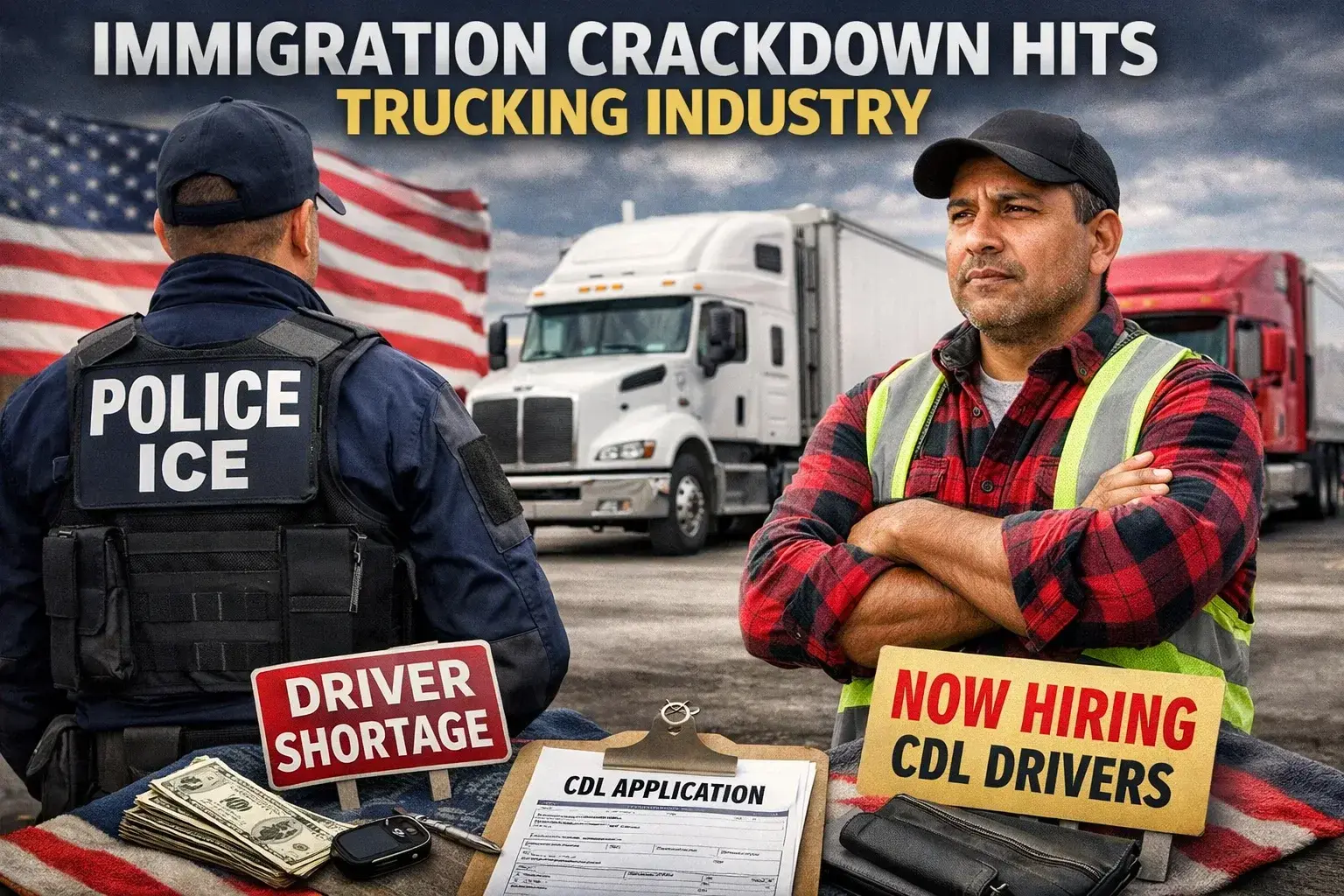
Stricter Immigration Policies Are Significantly Impacting the CDL Trucking Workforce
Published on March 15, 2026
The U.S. trucking industry is undergoing a significant transformation as stricter immigration policies reshape the CDL workforce. These new regulations, including enhanced documentation requirements and English proficiency standards enforced by U.S. Immigration and Customs Enforcement (ICE), have led to a marked decline in immigrant truck drivers, who historically accounted for nearly 17% of the CDL-A workforce nationwide. The shortage is impacting OTR, Regional, and Local routes, affecting freight delivery schedules, logistics efficiency, and operational costs.
For CDL-A drivers, this shift represents both challenges and opportunities. Experienced drivers with proper licensing and compliance documentation are now in higher demand than ever. Carriers are actively recruiting professionals for a wide variety of positions, including OTR CDL-A jobs, Regional routes, and Local driving roles. Specialized sectors such as Flatbed, Reefer, HazMat, Tanker, and Dry Van transportation are particularly affected.
Rising Demand for Qualified CDL-A Drivers
Trucking companies nationwide are implementing aggressive recruitment strategies to fill vacancies created by the shrinking labor pool. This includes not only conventional routes but also dedicated freight services requiring high levels of expertise. Experienced CDL-A drivers are being offered attractive compensation packages, including high pay per mile, performance bonuses, and flexible home time. This trend is reshaping the competitive landscape for truck driving jobs and elevating the market value of skilled drivers.
Higher Pay and Incentives Across the Industry
To address driver shortages, many carriers have increased pay scales for both new hires and veteran drivers. Signing bonuses, retention incentives, and enhanced benefits packages are becoming standard. For OTR and Regional drivers, pay rates are now more competitive, and in some cases, surpassing historical averages. This shift is particularly pronounced in sectors like HazMat and Reefer, where compliance and experience are critical.
Stricter Hiring Standards and Compliance Requirements
With enhanced federal enforcement, carriers are scrutinizing documentation, licensing, and safety records more rigorously. Drivers handling sensitive cargo, including hazardous materials or high-value freight, must adhere to stricter compliance standards. Maintaining a clean driving record, valid CDL-A license, and necessary endorsements for Flatbed, Tanker, or HazMat is essential for career longevity and access to high-paying positions.
Opportunities for Career Advancement
The current driver shortage creates pathways for advancement. Experienced CDL-A professionals may qualify for higher-paying OTR positions, leadership roles within fleets, or specialized dedicated routes. Owner-Operator CDL-A positions are also in demand, offering autonomy and potential for increased earnings. Staying informed about industry changes, licensing requirements, and top-rated carriers is crucial for maximizing career opportunities.
Impact on the Industry and Supply Chain
These policy changes underscore the vital role immigrant drivers have historically played in maintaining U.S. supply chain efficiency. The industry must now navigate the dual challenge of regulatory compliance and workforce sustainability. Logistics providers are adjusting routes, consolidating loads, and investing in recruitment to ensure continuity of service. This environment underscores the growing importance of skilled CDL-A drivers and the value of modern, well-maintained trucks in sustaining operations.
Tips for CDL-A Job Seekers
- Regularly check updated CDL-A job listings for OTR, Regional, and Local positions.
- Ensure all licenses, endorsements, and documentation are current and compliant.
- Consider specialized routes such as HazMat, Flatbed, Tanker, or Reefer to access higher-paying opportunities.
- Leverage benefits and incentives offered by top-rated carriers to secure competitive positions.
- Maintain a clean driving record and demonstrate reliability for career advancement.
In conclusion, stricter immigration policies are significantly affecting the CDL trucking workforce, creating both challenges and unique career opportunities. For CDL-A drivers, now is an optimal time to explore high-paying positions with competitive benefits, consistent freight schedules, and modern equipment. Whether pursuing OTR, Regional, or Local roles, staying proactive and informed will ensure success in this evolving market.
Explore the latest CDL-A job opportunities at CDL-A Jobs USA and stay updated with industry news via CDL News.
Find High-Paying CDL-A Truck Driving Jobs Today
Browse OTR, Regional, and Dedicated CDL-A positions with consistent freight, competitive pay, and modern equipment.
Browse CDL-A Jobs