


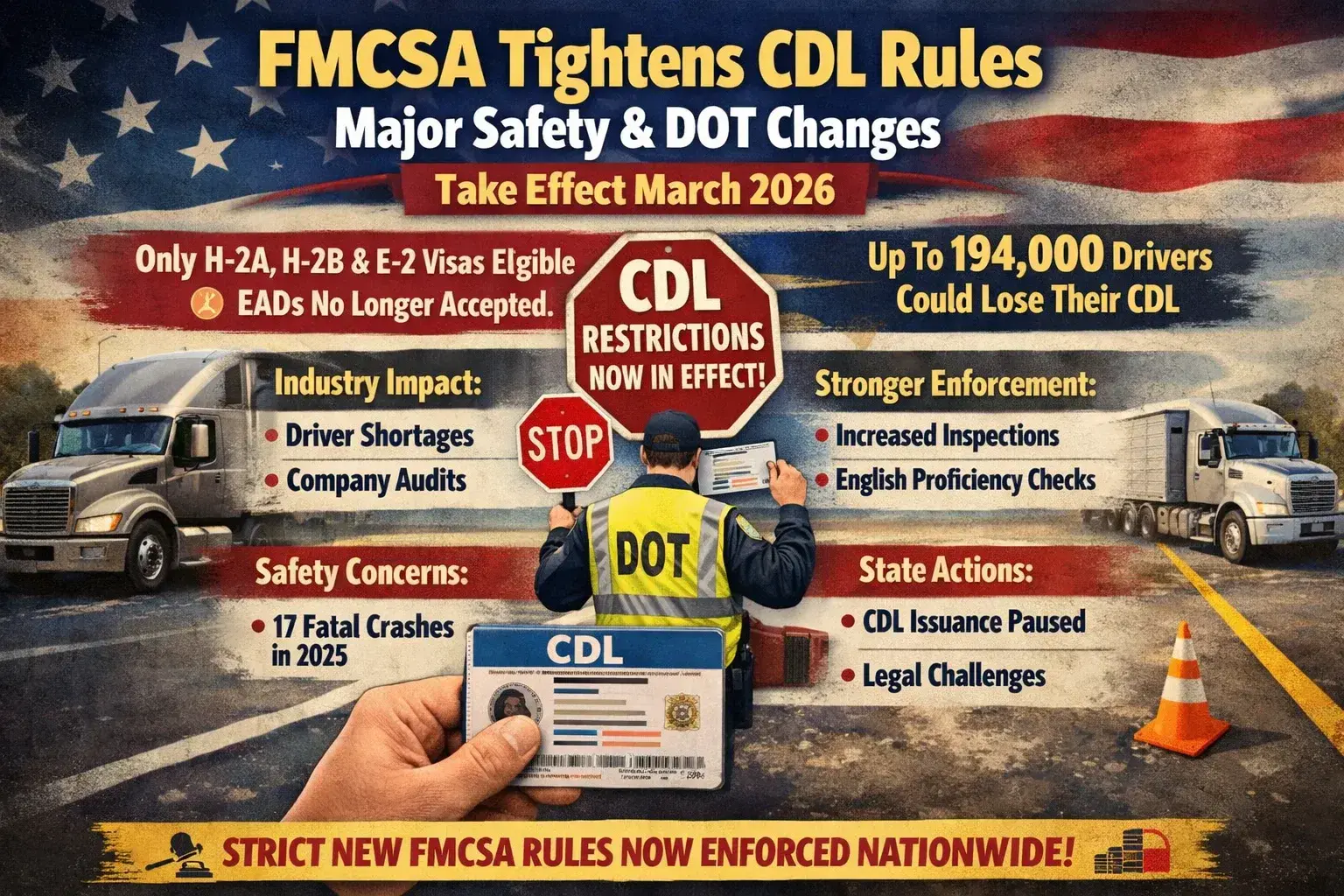
OVERVIEW OF THE NEW FMCSA RULE
As of March 16, 2026, the Federal Motor Carrier Safety Administration (FMCSA) has implemented one of the most impactful regulatory updates in the trucking industry. This rule focuses on CDL integrity, stricter qualification standards, and overall road safety across the United States.
The new regulation directly affects thousands of drivers working in OTR, Regional, and Dedicated routes. Whether you are hauling Flatbed, Reefer, Dry Van, Tanker, or HazMat freight, enforcement is already underway. Stay informed with the latest updates in our CDL News section.
NON-DOMICILED CDL RESTRICTIONS
The biggest change introduced by FMCSA is the restriction on non-domiciled CDL holders. Only specific visa categories such as H-2A, H-2B, and E-2 are now eligible to obtain or renew a CDL. Previously accepted Employment Authorization Documents are no longer valid for CDL issuance.
For those entering the industry, choosing a reputable CDL-A trucking school with job placement is more critical than ever to ensure all documentation meets these new federal standards.
INDUSTRY IMPACT AND DRIVER SHORTAGE
FMCSA estimates suggest that up to 194,000 drivers may not qualify for renewal under the new rules. This decline could lead to noticeable driver shortages in high-demand sectors.
- • Increased competition for qualified CDL-A jobs across all divisions
- • Potential wage increases as carriers use the truck driver salary calculator to adjust to market demands
- • Higher demand for specialized hauling like Flatbed, Tanker, and Reefer operations
DOT ENFORCEMENT AND SAFETY FOCUS
Enforcement of English Language Proficiency requirements has intensified under a broader DOT initiative to improve highway safety. Drivers must be able to read road signs and communicate effectively with inspectors.
CDL-A JOB MARKET OUTLOOK
Despite stricter regulations, the market for stable career opportunities remains strong. Demand is growing for experienced drivers across:
- • OTR CDL-A jobs across the USA with modern sleeper equipment
- • Consistent routes in Regional CDL-A trucking jobs
- • Home-daily local CDL-A truck driving jobs in major metro hubs
- • High-paying Owner-Operator CDL-A trucking jobs