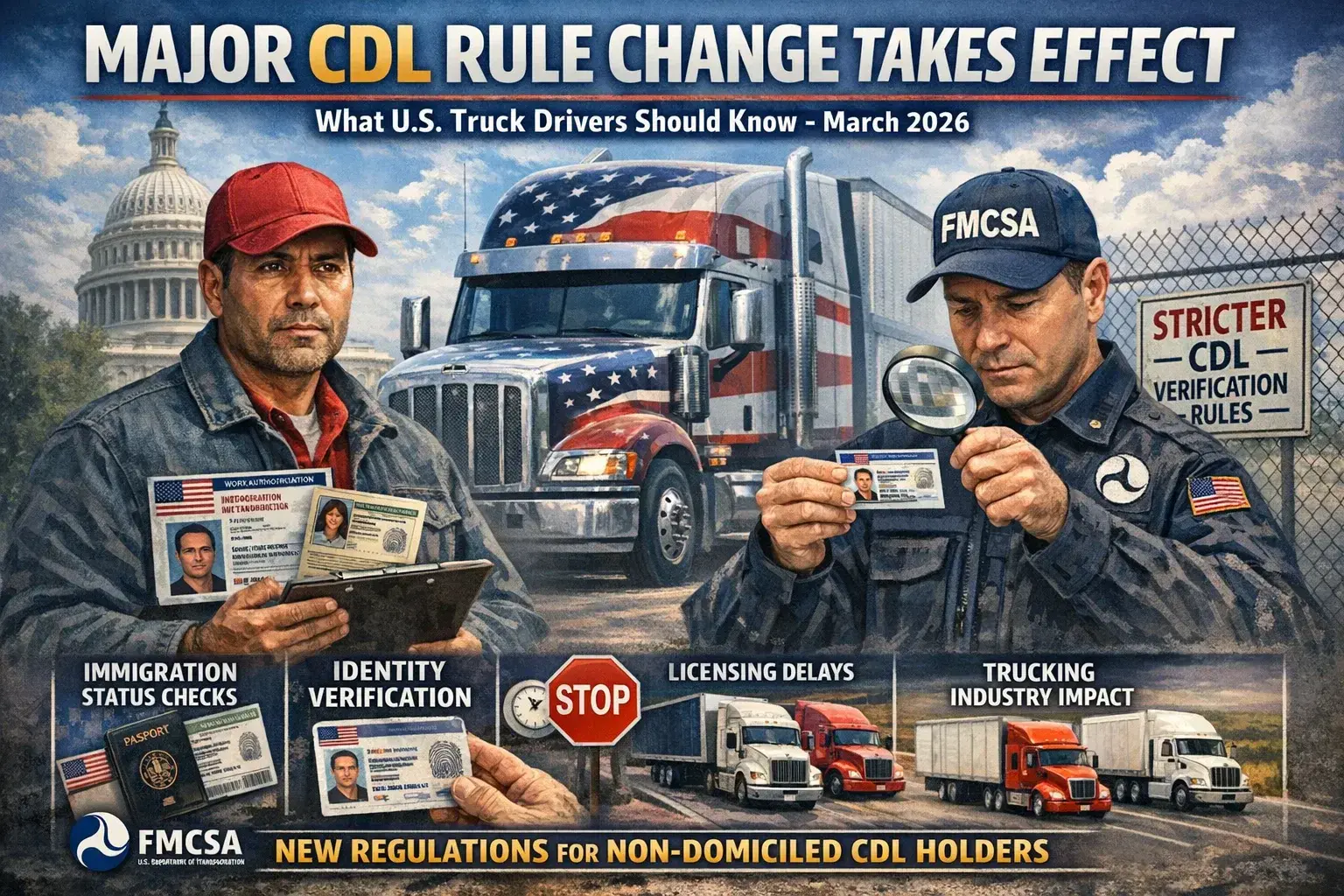
Major CDL Rule Change Takes Effect — What U.S. Truck Drivers Should Know (March 2026)
Published on March 21, 2026
Overview of the 2026 CDL Rule
A significant regulatory update affecting commercial truck drivers across the United States officially took effect in March 2026. The rule was issued by the Federal Motor Carrier Safety Administration (FMCSA) and introduces stricter verification procedures for certain Commercial Driver’s License (CDL) holders, particularly those applying for non-domiciled CDLs.
The new federal regulation aims to standardize identity verification procedures and ensure that drivers operating heavy commercial vehicles meet consistent documentation requirements nationwide. The rule applies to multiple segments of the trucking industry including OTR long-haul trucking, regional freight operations, and dedicated contract routes.
Thousands of CDL-A drivers work across the United States hauling freight in sectors such as Dry Van, Reefer refrigerated freight, Flatbed hauling, HazMat cargo, and Tanker transport. As federal regulators update licensing standards, both drivers and trucking companies must adapt to new compliance procedures.
Drivers searching for new positions in these sectors can explore available opportunities on the CDL-A jobs directory, which includes nationwide listings for experienced drivers operating modern trucks with competitive pay packages.
Why Federal Regulators Introduced the Rule
According to federal regulators, the primary goal of the rule is to improve the integrity and security of the commercial driver licensing system. Previously, the process for verifying identity and work authorization varied significantly between states.
Some state agencies issued non-domiciled CDLs to drivers authorized to work in the United States but who did not maintain permanent residency in the state where they applied. Because documentation checks differed between jurisdictions, regulators believed the system required stronger nationwide standards.
The updated rule establishes uniform verification requirements intended to:
- Create consistent CDL identity verification procedures nationwide
- Reduce the risk of improperly issued commercial driver licenses
- Improve documentation checks for commercial drivers operating large vehicles
- Strengthen overall highway safety for passenger vehicles and commercial fleets
For trucking companies that operate large fleets of OTR CDL-A trucks and regional freight operations, these changes may influence hiring procedures and onboarding documentation for new drivers.
What Changed for CDL Licensing
Under the new regulation, state licensing agencies must conduct stricter verification checks before issuing or renewing non-domiciled commercial driver licenses. This includes additional review of identity documents and employment authorization status.
Several key changes were introduced under the updated rule:
- Identity Verification – State agencies must verify driver identity using federally approved documentation systems.
- Work Authorization Checks – Applicants must confirm legal authorization to operate commercial vehicles in the United States.
- State Compliance Requirements – States that cannot meet federal verification standards must temporarily stop issuing non-domiciled CDLs.
- Renewal Documentation – CDL renewals may require additional documentation checks depending on driver status.
These changes primarily affect new applicants and drivers renewing certain types of commercial licenses. Most experienced CDL-A drivers already working in the United States will not experience immediate disruptions to their employment.
Drivers looking for new long-haul opportunities can explore OTR CDL-A truck driving jobs across the USA with strong weekly pay and consistent freight lanes.
Potential Impact on the Trucking Industry
The trucking industry continues to face a persistent driver shortage across multiple freight sectors. Carriers rely on a diverse workforce to keep supply chains moving efficiently across the country.
Industry analysts believe the new verification rule could temporarily impact driver availability in some markets if states experience delays implementing the new documentation systems.
Several trucking segments could see short-term adjustments:
- Long-haul OTR freight operations
- Regional distribution networks
- Port and intermodal freight corridors
- Specialized freight such as HazMat and Tanker transport
Despite these challenges, trucking companies continue to hire drivers for Dry Van, Flatbed, Reefer, Tanker, and Dedicated freight operations. Many carriers are offering competitive compensation packages including weekly pay above $1,600, sign-on bonuses, and access to modern fuel-efficient trucks.
Drivers interested in consistent schedules closer to home can also explore Regional CDL-A truck driving jobs or Local CDL-A driving positions.
Upcoming FMCSA Pilot Programs
In addition to the CDL verification update, the Federal Motor Carrier Safety Administration is preparing several pilot programs that could potentially reshape federal trucking regulations in the coming years.
These programs will test new approaches to the federal Hours-of-Service (HOS) rules that regulate how long commercial drivers can operate before taking rest breaks.
Potential pilot program changes may include:
- Flexible sleeper-berth split options
- Possible adjustments to the 14-hour driving window
- Additional flexibility during severe weather or unexpected delays
Participation in these programs will be voluntary and limited to small groups of drivers and carriers. The goal is to study how schedule flexibility might improve safety, reduce fatigue, and increase driver job satisfaction.
Owner-operators interested in independent freight opportunities can browse Owner Operator CDL-A trucking jobs available across multiple freight sectors.
What CDL-A Drivers Should Do Now
Although the rule does not immediately affect most current CDL holders, drivers should still take steps to stay compliant with federal regulations and state licensing requirements.
- Ensure CDL documentation and medical certificates remain current
- Maintain copies of identification and work authorization documents
- Follow regulatory updates through reliable trucking news sources such as CDL trucking news
- Consult carrier safety departments regarding documentation procedures
The trucking industry continues to evolve as regulators update safety standards and licensing systems. For professional drivers operating modern semi trucks across OTR, regional, and dedicated freight networks, staying informed about regulatory developments is an important part of maintaining a successful and compliant career.
As freight demand remains strong across the United States, experienced CDL-A drivers hauling Dry Van, Flatbed, Reefer, HazMat, and Tanker cargo will continue to find strong employment opportunities and competitive salaries throughout the industry.
Find High-Paying CDL-A Truck Driving Jobs Today
Browse OTR, Regional, and Dedicated CDL-A positions with consistent freight, competitive pay, and modern equipment.
Browse CDL-A Jobs