WHAT’S NEW IN 2026
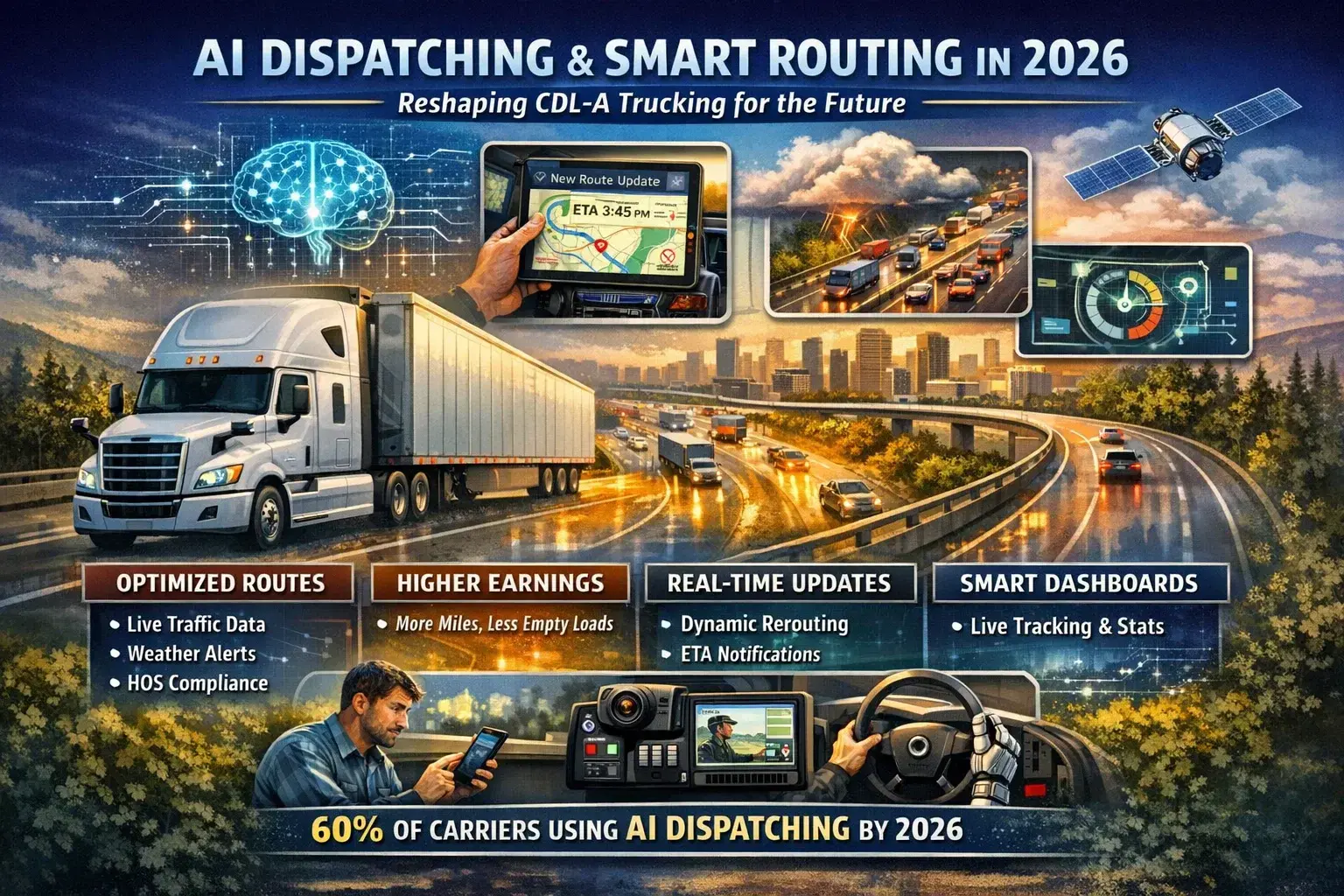
Instead of traditional dispatchers assigning static routes, many modern fleets now use systems that analyze live traffic, weather, and HOS data. These platforms adjust routing dynamically throughout the trip to ensure maximum efficiency.
Integration of ELD data into these platforms allows for automatic support of compliance while optimizing next loads to reduce deadhead miles across high-demand OTR CDL-A jobs across the USA.
HOW AI SYSTEMS WORK
AI dispatch systems are typically integrated into fleet management platforms and mobile apps. The process is a continuous cycle:
- • Continuous monitoring of traffic patterns, weather disruptions, and delivery timing.
- • Instant route recalculation if road closures or storms occur.
- • Immediate matching of the most efficient next load upon delivery.
This adaptive planning is becoming standard for drivers in regional CDL-A truck driving jobs, where regional routing complexities require constant adjustment.
IMPACT ON CDL-A DRIVERS
AI-driven routing can result in higher productive weekly miles and improved overall earnings. Drivers can use a truck driver salary calculator to see how optimized mileage translates to yearly pay.
KEY OPERATIONAL REALITIES
While these systems bring efficiency, they also introduce new dynamics. Some drivers navigate a learning curve with new dashboards, and there is often closer monitoring of idle time and braking patterns.
For those in owner-operator CDL-A trucking jobs, these tools represent a significant shift in how they select and manage freight independently of a human dispatcher.
2026 INDUSTRY OUTLOOK
Industry forecasts suggest that by late 2026, more than 60% of U.S. carriers will use AI-assisted dispatch. Real-time freight optimization is expected to replace many traditional static planning models in local CDL-A jobs as well, increasing route density.
THE BOTTOM LINE
Success in the modern environment depends on adaptability. AI dispatching isn't just a tool; it's a structural shift that offers more efficient routes, fewer empty miles, and greater visibility into trip performance for the professional driver.