CDL A Jobs USA


Home CDL-A Jobs Job Form CDL News
CDL A Job Type ▾
Employers-partners CDL-A Pay Calculator States ▾
Driver Hub ▾
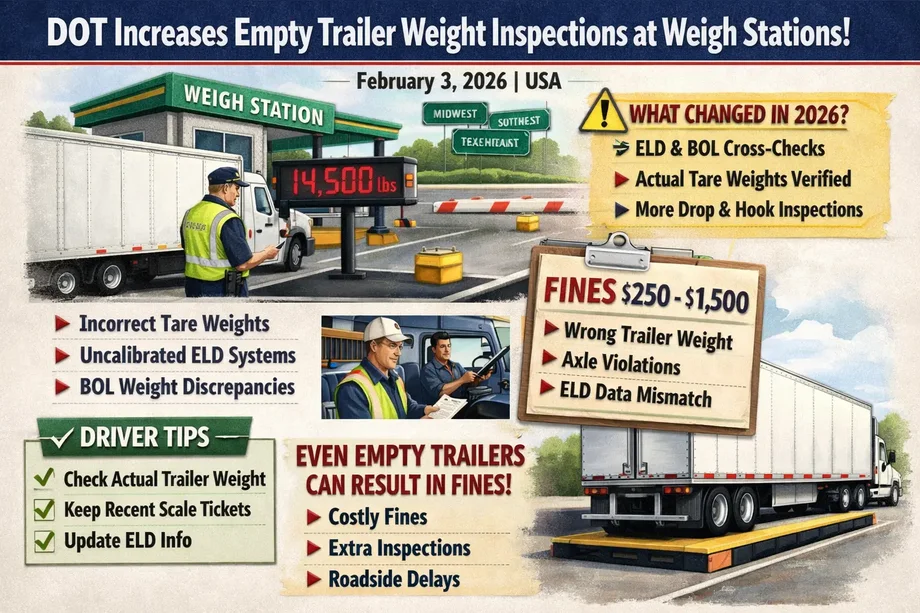
February 3, 2026 | USA
Starting February 2026, DOT inspectors across several major U.S. trucking corridors — including the Midwest, Southeast, and Texas — have significantly increased enforcement focused on empty trailer weight accuracy. Dry van and reefer equipment are receiving the most attention.
Fines range from $250 to $1,500, depending on the state and violation severity.
Even an empty trailer with incorrect weight data can result in fines, trigger additional inspections, and create problems during roadside checks — all of which affect safety scores and future job opportunities.
Bottom line: Accurate trailer weight data is no longer optional. In 2026, DOT enforcement makes it a must for every professional driver.
